


Wellness
Sleep patches: what they are, how they work and what to expect from them
A sleep patch will not knock you out. It releases melatonin slowly through the skin and tells your body that night has started. What is inside, how it gets through and who should not use it.

Reviewed by Dr Cristina Claver, PhD in Pharmacy.
A sleep patch is an adhesive you put on your skin before bed. It releases melatonin and other actives gradually through the night, without going through your digestive system. It is not a sleeping pill and it will not knock you out. What it does is give your body the signal that night has started, and support your rest while you are wearing it.
That said, it is a young category and there is a lot of noise around it. So let us be specific: what is inside, how it crosses the skin, what you can expect, what you cannot, how much melatonin it carries and who should not use it.
What is a sleep patch?
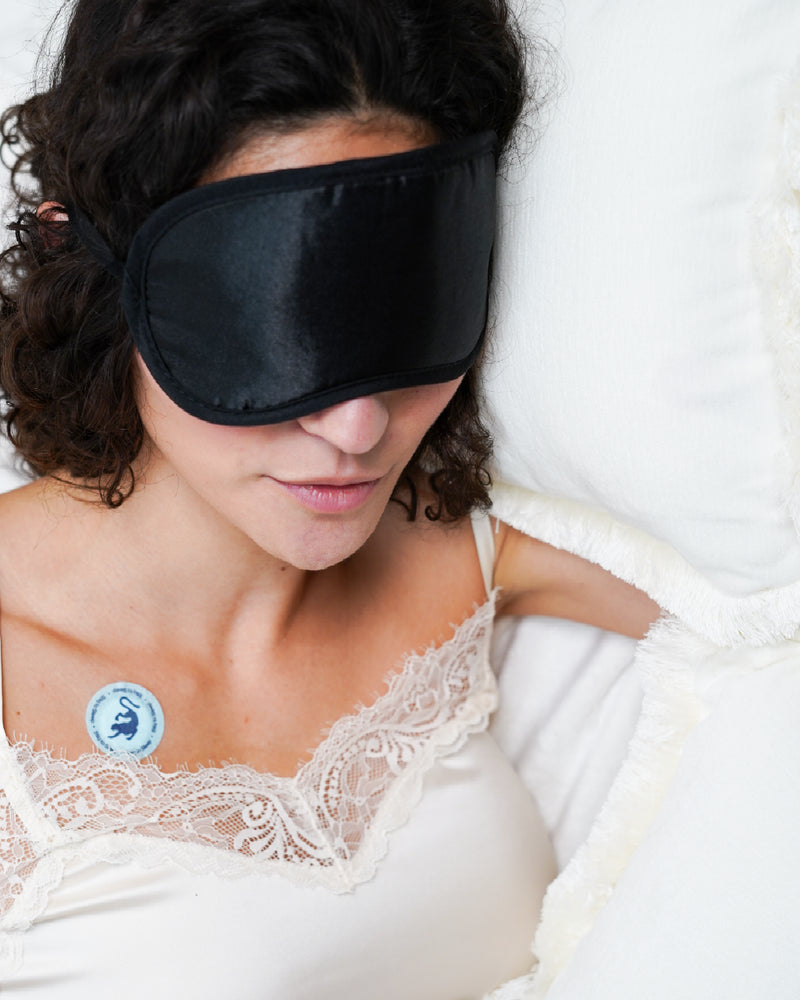
A sleep patch is a transdermal patch you apply to clean skin before bed. It releases its ingredients steadily while you wear it, usually for up to eight hours.
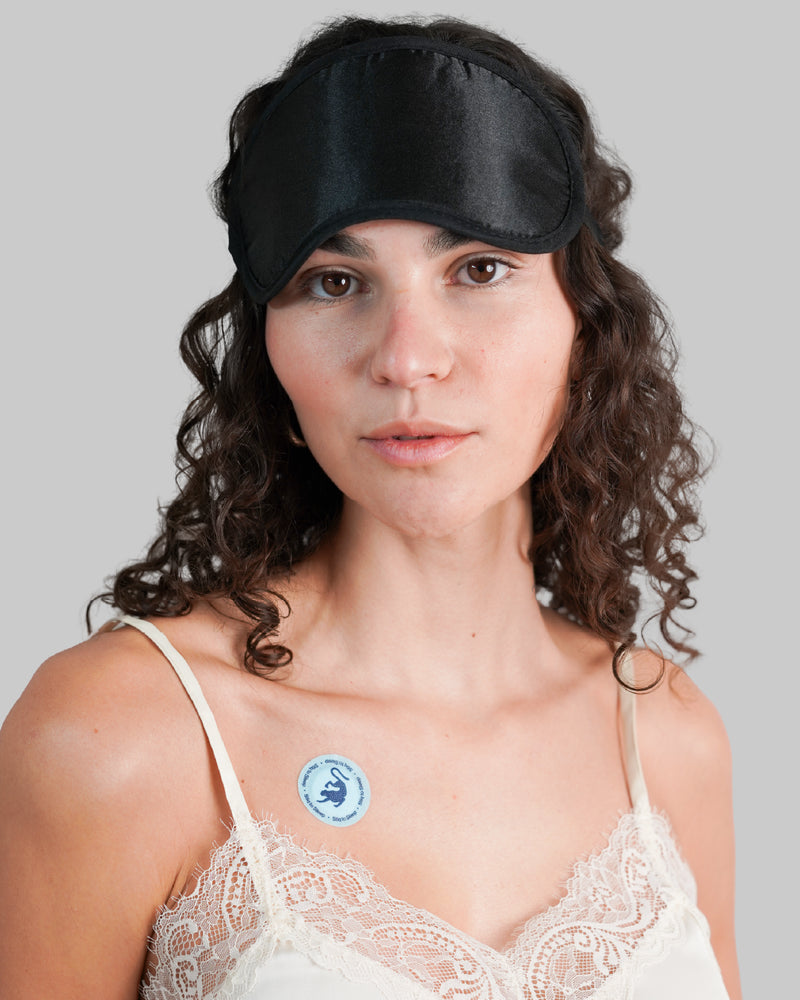
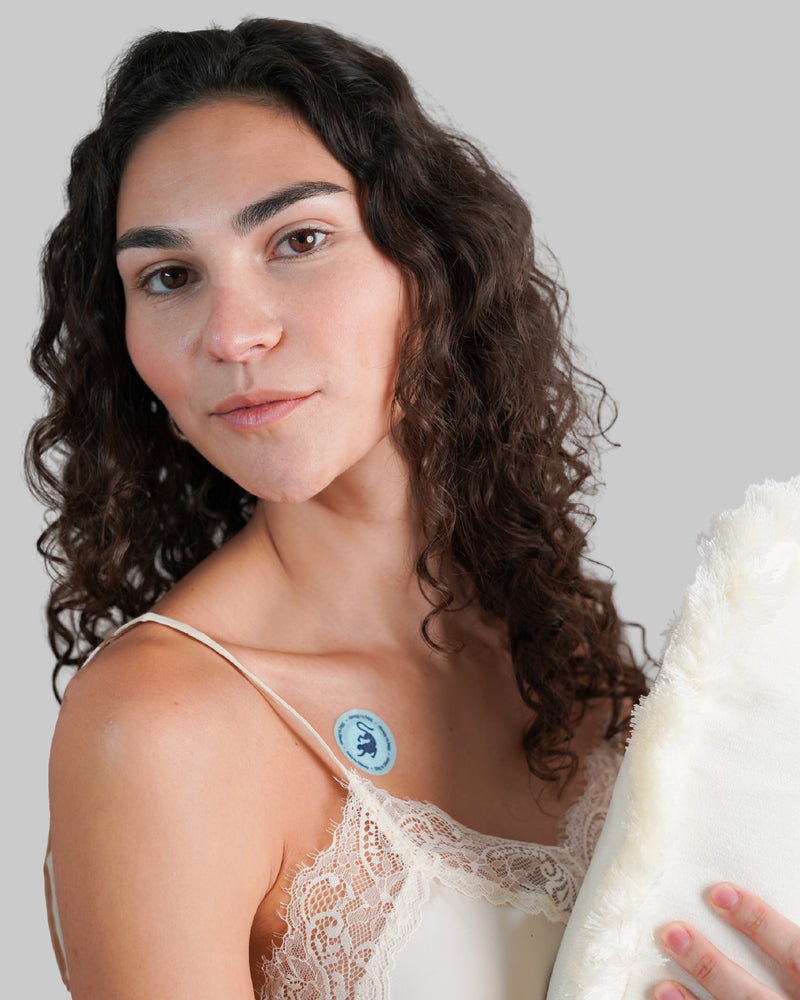
The difference from a capsule or a gummy is not the ingredient. It is the route. A tablet goes in through your digestive system; a patch goes in through your skin. That changes the release profile, which is steadier across the night instead of a peak that rises and falls. For melatonin given transdermally, that sustained release profile is documented in the scientific literature. It is the same principle behind our vitamin patches across the rest of the range.
And it is worth saying up front: this is a supplement, not a medicine. It does not treat insomnia and it does not replace anything a professional has prescribed you.
Why your skin lets almost nothing through
This is the question that actually matters, and the one almost nobody in the category answers. If skin is a barrier, how does anything get through it?
The 500 Dalton rule
The outermost layer of your skin, the stratum corneum, is an extraordinarily effective border: it keeps out pollution, microorganisms and radiation. There is a well-known rule in dermatology, the 500 Dalton rule, which says that molecules above that molecular weight struggle to cross intact skin by simple diffusion.
Any brand selling a vitamin patch runs into that wall. The question is not whether skin absorbs. It is how you open the door without forcing the lock.
Sea sponge microneedles, activated by friction
The usual route is chemical permeation enhancers, such as certain alcohols that disrupt the skin's lipids and can irritate it. We went another way: silica spicules from purified marine sponges, worked into the patch's hydrogel.
They are natural microneedles, finer than a hair. And they need activating. That is why rubbing the patch for about ten seconds after you place it is not a detail from the manual. It is what makes those spicules open temporary microchannels in the outermost layer of skin, for the actives to pass through. Channels your skin closes naturally soon after. Skip that step and the patch is on, but it is not working.
What is inside the Stiq Sleep patch
The formula of the Sleep patch combines four things that work at different points in the night:
- Melatonin. Not a sedative: it is the chronobiological signal that tells your body clock night has started. It is the switch, not the sleeping pill.
- Precursors. They set up the chemistry so your brain can come down from the activity that precedes sleep.
- Night botanicals. Led by valerian extract, a classic night-time plant that helps loosen built-up muscle tension. While melatonin works on the timing signal, these work on the physical side.
- Vitamins. They act as cofactors: they supply what your body needs to turn those precursors into its own serotonin and melatonin.
The formula is developed in-house by Dr Cristina Claver, PhD in Pharmacy, and the patch contains no chemical permeation enhancers.
What to expect from a sleep patch, and what not to
This is the part we most want to be clear about, because this category promises too much.
What it does not do:
- It does not knock you out. It is not a sleeping pill. If you want something that switches you off, this is not it.
- Melatonin is not a relaxant. It mainly helps shorten the time it takes you to fall asleep, because it brings the night signal forward. That is not the same as sedation.
- It does not fix poor sleep habits. If you get into bed with your phone at half one, the phone wins. The patch supports a routine. It does not replace one.
- It is not for insomnia. If you have been sleeping badly for weeks or months, there are causes worth looking at, and that is your doctor's territory, not a supplement's.
- It does not work the same for everyone. Response to melatonin varies between people. Anyone guaranteeing you a specific result is selling you something.
What it does do:
- Gives the timing signal that helps you drop off sooner, especially if your hours are out of sync.
- Releases steadily for the hours you wear it, rather than a peak that runs out.
- Nothing to swallow, no glass of water to remember, no digestion to wait for.
- Works better with continued use than on the first night. It is a pattern, not a switch.
And what about the claim that vitamin patches do not work?
It is a fair criticism and we are not going to dodge it. The underlying argument is that skin is a very effective barrier and that not everything you put on it goes in. That is true. And this category does contain products that amount to an adhesive with an ingredient list printed on the back, trusting that nobody asks how any of it is supposed to cross the stratum corneum.
The difference is whether there is a permeation mechanism or not. A patch with nothing to open the barrier relies on passive diffusion, and there the 500 Dalton rule limits how much can get through. A patch with microneedles proposes something else: it opens temporary microchannels and creates a way in that would not exist otherwise.
That does not make any patch a medicine and it does not guarantee a result. But it is the question worth asking any brand in this category, ourselves included: where exactly does it go in? If there is no specific answer, be sceptical.
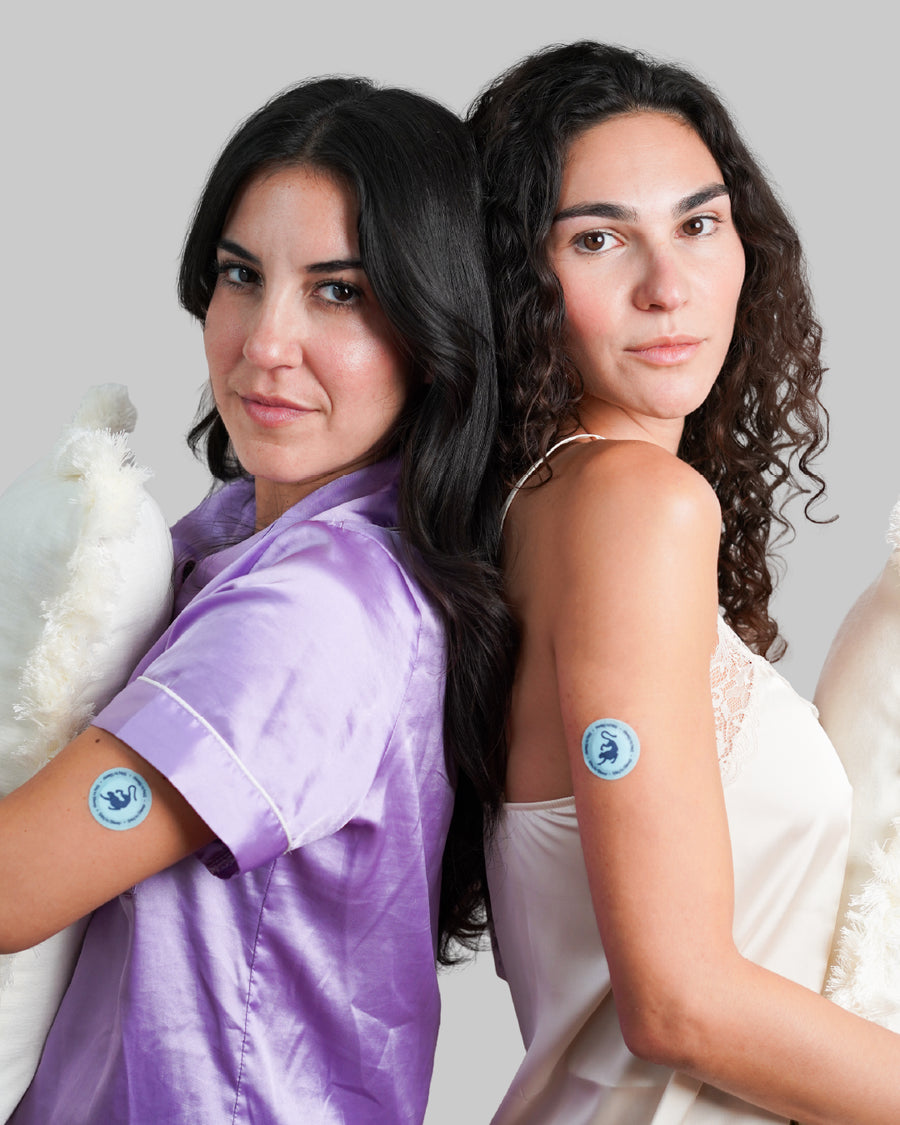
Vitamin patches · 30 patches
Sleep Patches
Melatonin and night botanicals, released slowly while you sleep. One patch, up to 8 hours.
How much melatonin it carries and how long it takes
Melatonin is one of the few ingredients in this category with an authorised health claim in the European Union, linked to reducing the time it takes to fall asleep and conditional on a specific amount per serving.
On timing: taken orally, melatonin usually starts to be noticeable between thirty minutes and an hour after the dose. A patch works differently, because it is not after a quick peak but a steady presence through the night. So it makes sense to put it on as part of getting ready for bed, and not five minutes before you turn the light off.
Safety and contraindications: who should not use it
Being externally applied and gradually released, a patch has a different profile from an oral dose. That does not make it harmless, and there are situations where it is better not to use it, or to check first.
Does melatonin cause dependence?
It is the most repeated question and the short answer is that melatonin does not create physical dependence in the way that is understood with other sleep products. What can appear is a mental routine: associating the gesture with going to bed and missing it when it is not there. Which is why it makes sense to use it in specific stretches — a change of hours, a spell of unsettled sleep — rather than permanently by default.
Who should check with a professional first
- If you are pregnant or breastfeeding.
- If it is for someone under 18.
- If you take medication regularly, whatever it is. Your doctor or pharmacist is the one who can tell you whether there is an interaction.
- If you have a diagnosed condition, especially one that affects your sleep.
- If you will be driving or operating machinery during the hours you are wearing it.
And on your skin: although the hydrogel is designed to minimise the risk of irritation, if you notice redness or discomfort, take it off. As with any product applied to skin, it is worth trying a small area first.
How to wear it and where to put it
- Start with clean, dry skin. It will not stick properly over cream or oil.
- Lift the backing and hold the patch by the edges.
- Peel the protective film off the back.
- Press it firmly onto your skin.
- Rub it for about ten seconds. This step activates the microneedles and is not optional.
- Wear it for up to eight hours and take it off when you wake up.
Frequently asked questions
Do sleep patches really work?
They work as what they are: a supplement that provides melatonin and botanicals with sustained release. They help you drop off and they support a rest routine, but they are not a sleeping pill and they do not solve an underlying sleep problem.
How long should you leave it on?
Up to eight hours, which is roughly a night. You put it on before bed and take it off when you wake up.
How long does it take to work?
A patch is not after a quick peak, it is there through the night. So it makes sense to put it on as part of getting ready for bed, and not right before you turn the light off.
Can you use one every night?
It makes more sense to use it in specific stretches than indefinitely. If you have needed it to sleep for a long time, the thing to do is look at the cause with a professional.
Can you shower or train with it on?
It holds up to sweat and water once it is properly stuck down. Always apply it to dry skin and give it a few minutes before getting it wet.
Can you combine it with other Stiq patches?
Yes, they are designed for different moments of the day. Even so, if you take medication or have a pre-existing condition, check first.
Can you reuse it?
No. Each patch is single use.
Where can you buy sleep patches?
Ours are available in our online shop, with delivery across mainland Spain.
A sleep patch is a different way of getting melatonin in: through the skin, slowly, and without going through digestion. If your problem is that you find it hard to get into night mode, it is worth trying. If you have been going months without sleeping, what is worth doing is seeing a doctor.
